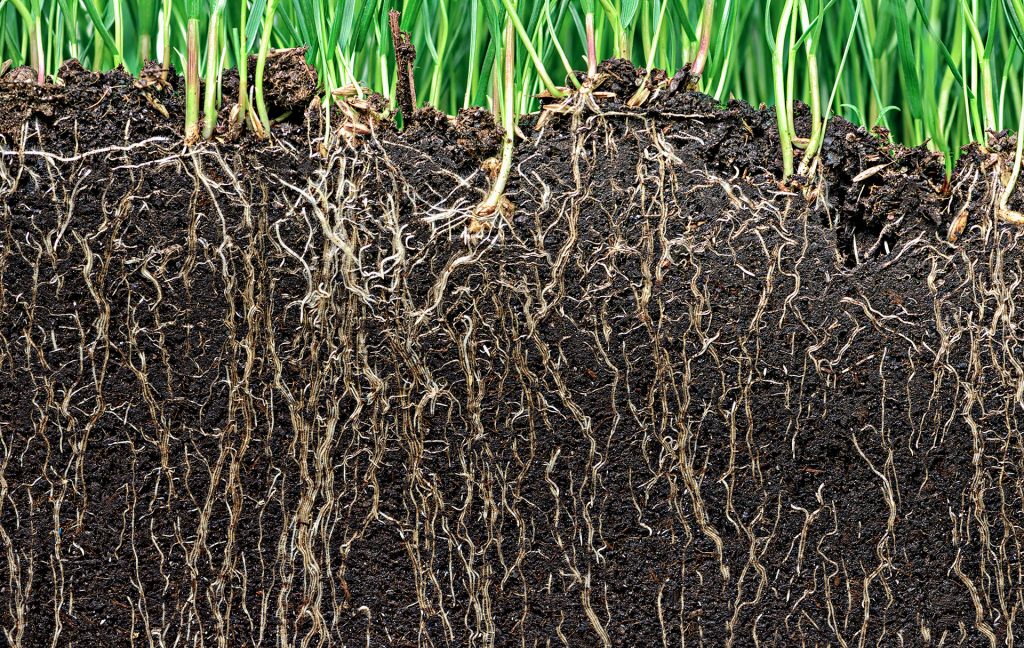
What's actually in the bottle — all 250 of them.
Most turf products give you three numbers on a bag. We publish the full microbial profile: 250+ identified species — 151 bacterial and 99 fungal — and exactly what each group does for your turf.
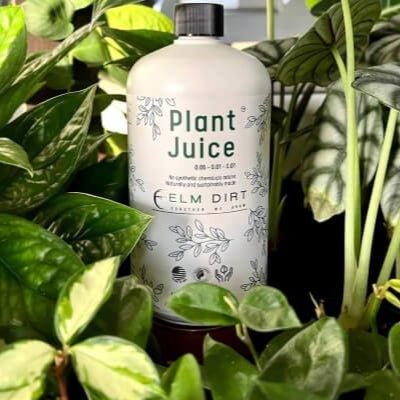 Every batch is biologically tested — the profile is measured, not marketing.
Microbes don't just feed the plant. They wake it up.
Synthetic salts deliver a narrow band of NPK but bypass the biology turf evolved to depend on — spoon-feeding the plant while shutting down its own immune, defense, and nutrient-foraging pathways.
A living microbiome does the opposite. It reactivates the signaling that triggers root expansion, natural stress resistance, and efficient nutrient cycling — building a secondary root system that reaches water and nutrients the turf couldn't get to on its own.
See the five functionsFive jobs. Hundreds of organisms.
Every species in the profile is sorted into the function it performs in the root zone. Representative species shown — the full list is in the published profile below.
Mycorrhizal & root fungi → drought tolerance
Fungal hyphae extend the effective root system far past the plant's own roots, improving water absorption, micronutrient uptake and soil-root integration. Combined with extracellular polysaccharides that improve soil aggregation and water-holding capacity, this is how turf rides out dry spells on less irrigation.
In the profile: Mortierella spp., Sebacina sp., Trichoderma harzianum, Clonostachys rosea, Oidiodendron cereale.
Nitrogen-fixers → green-up
Convert atmospheric nitrogen gas (N₂) into plant-available forms — green color and growth with less synthetic nitrogen applied, and less of the N load that drives runoff.
In the profile: Rhizobium spp., Azospirillum sp., Azorhizobium, Paenibacillus graminis.
Phosphorus solubilizers → deeper roots
Mobilize chemically bound phosphorus through organic acids and enzymes, improving root development, energy transfer and establishment.
In the profile: Pseudomonas putida, Bacillus circulans, Penicillium bilaiae, Aspergillus niger.
PGPR → stress & disease defense
Plant growth–promoting rhizobacteria enhance root branching, hormone production and nutrient-use efficiency while activating the plant's own stress and defense pathways — easing disease pressure and reliance on pesticides.
In the profile: Azospirillum sp., Pseudomonas spp., Variovorax sp., Bacillus circulans.
Decomposers → thatch breakdown
Break down lignin, cellulose and organic residue, recycling nutrients and building long-term soil structure — the biological answer to thatch.
In the profile: Aspergillus spp., Penicillium spp., Cellulosimicrobium sp., Chitinophaga spp.
What the biology does for the soil — and downstream.
The published profile.
A biological analysis identifying every organism in the product, grouped by function. Three numbers on a bag can't compete with this.
DEMO · profile PDF to be wired
Elm Dirt Biological Analysis · Plant Health & Fertility Functional Review · prepared Feb 2026.
The science we build on.
Living Soil Technology applies decades of soil-food-web and rhizosphere research: the nutrient-cycling roles of bacteria and fungi, mycorrhizal symbiosis, and the rhizophagy cycle by which plants draw nutrients directly from root-associated microbes.
The soil food web
Bacteria and fungi cycle nutrients into plant-available forms — the basis of biological fertility.
Mycorrhizal symbiosis
Fungal partners trade water and micronutrients for plant sugars, extending the root system.
The rhizophagy cycle
Plants take microbes into their roots, harvest nutrients from them, and release them to forage again.
The science is real. So is the program.
Pick your operation and we'll build a biological program around it — backed by everything on this page.